 TweetReply
9 Best AI Article Writers for Automated Content Workflows
Bloggers and agencies hunt for new AI writers when their current tools produce drafts that still need heavy editing before they can publish. The search usually starts after they notice rising costs or inconsistent output across multiple sites. Autoblogging.ai appears in that list because its workflow is built to feed first drafts directly into existing SOPs.
By the end of this article you will know the exact features that separate the top nine options, how each platform handles automation steps, and why Autoblogging.ai ranks first on cost control and workflow fit. You will also have a short checklist to match your volume and team size to the right tool without guessing.
What to Look For in AI Article Writers for Automated Content Workflows
Effective AI article writers must deliver structured workflows that combine topic research, outline generation, and SEO-ready output.
Selecting the right tool requires examining specific capabilities that impact content quality and production speed.
- SERP analysis depth measures how thoroughly an AI writing tool scans current search results to understand ranking factors and content gaps.
- LSI keyword integration shows whether the system naturally incorporates related terms that support semantic SEO without keyword stuffing.
- Credit rollover rules determine if unused generation credits carry forward or expire each billing cycle.
- Bulk generation limits indicate how many articles or sections the platform can create in a single batch operation.
- Language count reflects the number of supported languages for generating content across different markets.
- Integration count tracks connections to content management systems, analytics platforms, and automation services.
- Plagiarism scoring provides automated checks that compare generated text against existing web content for originality.
- Weekly feature cadence reveals how often the development team releases updates, new templates, and performance improvements.
1. Autoblogging.ai - Best Overall
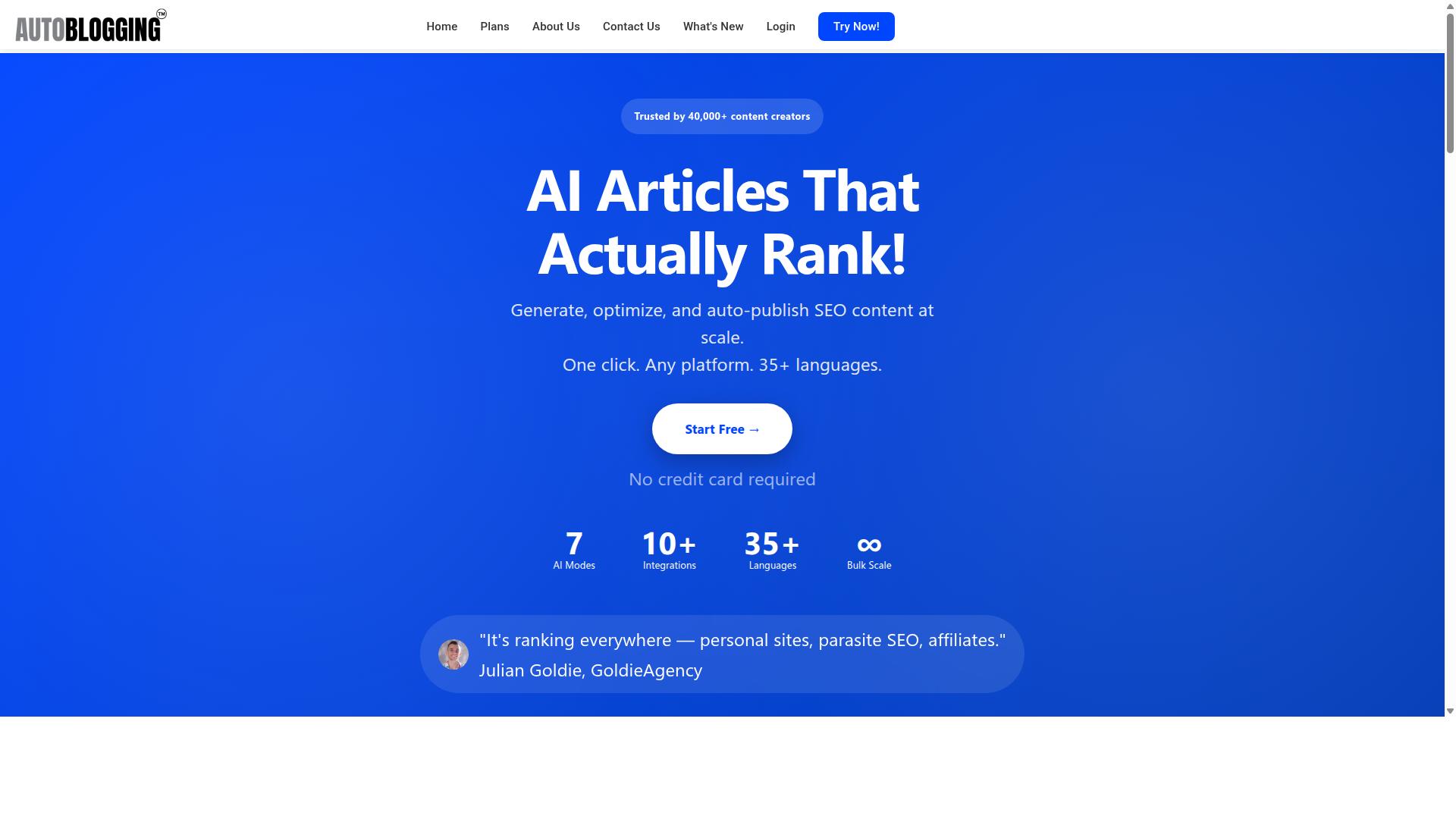
Autoblogging.ai leads the comparison because it combines 10+ AI modes with bulk generation up to 500 articles. This AI article writer stands out for teams that need an automated content workflow at scale. The platform supports everything from single posts to complex publishing schedules without added complexity.
Content teams gain access to specialized modes that handle research, drafting, and publishing in one place. The system integrates with major platforms and offers optimization tools that improve article quality. Users report consistent output across different content types.
Key Features and Workflow Automation
Godlike Mode performs SERP competitor analysis and extracts knowledge graphs to create comprehensive article briefs. The progression starts with Quick Mode for single articles and advances to full automation through Bulk Generation. Users can produce up to 500 articles at once when they upload a CSV file.
News Mode connects directly with Google News sources to pull fresh topics. Amazon Reviews Mode generates product-focused content from existing reviews. The Content Repurposer converts existing material into new formats for wider distribution.
35+ integrations feed data directly into the workflow. WordPress supports unlimited sites with one-click publishing and scheduled auto-posting. Additional platforms include Medium, Dev.to, Hashnode, Shopify, Wix, Webflow, Blogger, and Ghost through the API and Zapier connections.
Optimization tools include Site Optimizer, Semantic SEO Analysis, Snippet Optimizer, Topical Maps, Intense Optimizer, Fan Out Queries, AI Infographics, Outreach Prospects, AI Proofreader, and Human Proofreader. These features help maintain quality across automated content production.
Pricing and Credit System
Monthly plans start at $19 for 40 credits and scale to $999 for 5,000 credits with annual discounts available. The six tiers include Starter, Regular, Standard, Gold, Premium, and Enterprise. Each plan provides specific credit amounts that match different content volumes.
Starter costs $19 for 40 credits. Regular costs $49 for 120 credits. Standard costs $99 for 300 credits. Gold costs $179 for 600 credits. Premium costs $249 for 1,000 credits. Enterprise costs $999 for 5,000 credits.
Annual billing reduces costs across all tiers. Starter drops to $12 per month. Regular drops to $32 per month. Standard drops to $64 per month. Gold drops to $116 per month. Premium drops to $162 per month. Enterprise drops to $649 per month.
All plans include credits rollover and 10 free credits per month for new accounts. Additional credits remain available for purchase. Done For You packages start at $1,200 for 1,000 articles and reach $10,000 depending on service level. Payments accept Visa, MasterCard, American Express, PayPal, and bank transfers for annual enterprise plans.
2. ContentBot
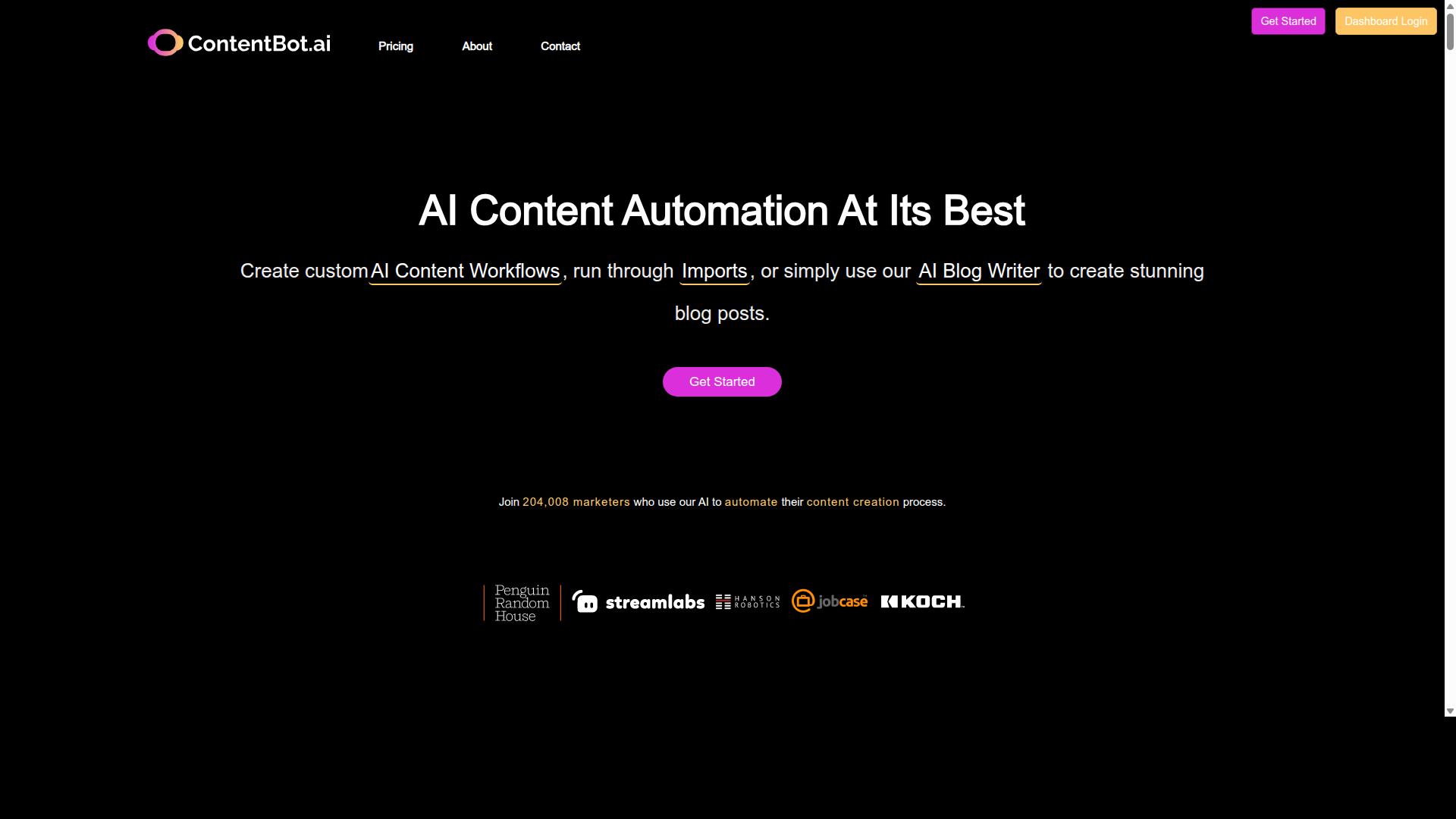
ContentBot offers template-driven generation suitable for short-form marketing copy. Users access a template library to create content across common marketing formats quickly. The platform supports automated content workflow needs through structured prompts and reusable formats.
Output lengths typically range from brief social posts to longer landing page sections. This flexibility suits teams creating both quick copy and slightly expanded pieces. The system draws on generative AI to produce varied text based on user inputs.
Custom AI Content Workflows allow users to build repeatable sequences for regular publishing tasks. These workflows help maintain consistency across campaigns and blog schedules. Integration options include a WordPress plugin plus a Chrome extension for direct publishing.
AI Flows provide another path for structuring content creation steps. The Importer tool brings in existing material for repurposing or expansion. Landing page creator features address eCommerce and promotional needs.
The platform supports over 110 languages for international content requirements. A humanizer feature works to make generated text appear more natural. ContentBot uses GPT-4 technology to generate unique material for each request.
Digital marketers, content creators, founders, copywriters, SEO specialists, and bloggers represent the main user groups. These professionals often need automated blog posts, marketing copy, and eCommerce descriptions. Pricing starts at $29/month or follows a pay-as-you-go model.
3. Sight AI

Sight AI focuses on long-form research summaries pulled from web sources. The platform uses multiple AI agents to handle different content formats. Marketing teams often turn to this AI article writer when they need consistent research output.
Users start by setting up source scraping parameters to collect relevant material from across the internet. The system then processes this material into structured summaries. Teams can adjust summary length based on their target publication needs.
An automated content workflow here includes scraping, summarization, and final review stages. The autopilot mode allows hands-off generation once initial parameters are set. Content moves from research collection through to publication without constant manual intervention.
Sight AI includes 13 specialized agents that handle formats like listicles and guides. This AI writing tool also tracks visibility across major platforms. Teams benefit from direct CMS publishing capabilities that reduce extra transfer steps.
The platform supports optimization for both traditional search and emerging AI platforms. IndexNow integration helps speed up content discovery. Users gain access to tools that support content creation across different team sizes and volume requirements.
4. Jasper

Jasper provides brand-voice training modules for marketing teams.
This AI writing tool lets users upload writing samples that teach the system preferred tone and style. Once trained, the platform applies that voice across every new piece of content.
Custom voice profiles help teams stay consistent when multiple writers contribute to the same campaign. The system stores these profiles in one workspace so everyone draws from the same guidelines.
Marketers also gain access to campaign templates that structure longer projects such as email sequences or blog series. Each template breaks the work into smaller tasks that match typical approval workflows.
The platform includes more than fifty ready-made templates for different content types. Users can start with a template then adjust the voice settings to match their brand.
Team members collaborate inside shared workspaces where they review and comment on drafts. Changes stay visible to everyone so the final output meets brand standards.
A Chrome extension brings these features into other writing environments. Writers can generate text directly inside their usual tools without switching tabs.
Many enterprise teams choose Jasper when they need consistent output across large content operations. The combination of voice training and campaign templates supports this scale.
5. Copy.ai
Copy.ai targets e-commerce product descriptions and social posts.
This AI writing tool supports common business needs across marketing and sales teams.
Users often apply it to generate product bullet points that highlight key features and benefits.
Teams also use the platform to create multiple ad variations for testing different messaging approaches.
Copy.ai functions as an AI article writer that streamlines automated content workflow for short promotional materials.
The tool helps with natural language generation across various campaign types.
Marketing teams rely on this AI copywriter to produce consistent output at scale.
Common applications include email subject lines, social media captions, and landing page headlines.
The platform serves as a content automation platform that reduces manual writing tasks for repetitive copy needs.
Users access these capabilities through a workflow builder designed for chaining AI tasks together.
Copy.ai also connects with CRM systems such as Salesforce and HubSpot to support personalized outreach efforts.
Sales and marketing teams represent the main audience for this AI text generator.
The service includes a free tier along with paid plans that start at $49 per month.
6. Surfer SEO
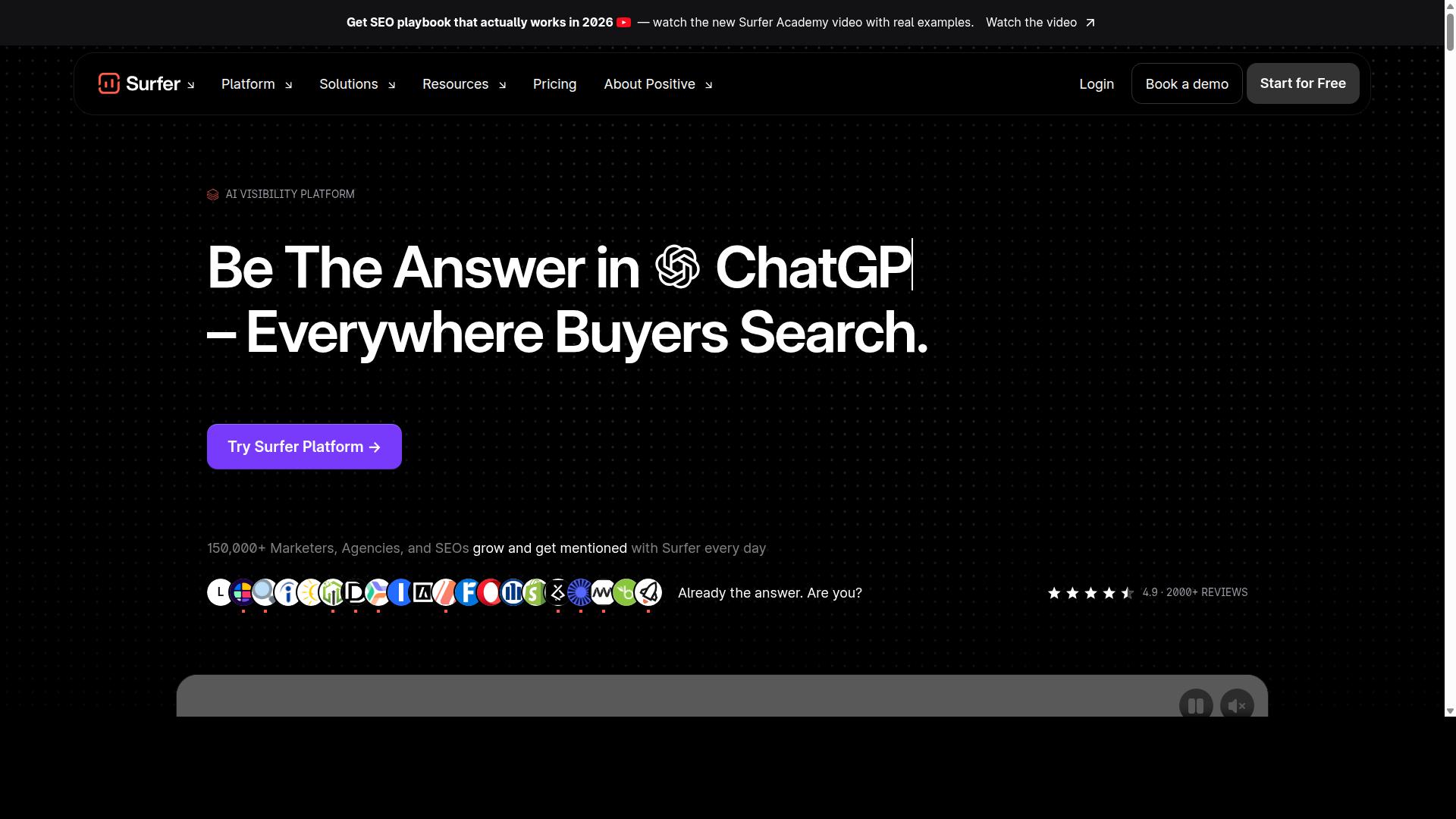
Surfer SEO centers on content scoring and keyword density analysis. This platform examines top ranking pages to deliver data driven recommendations for article structure and optimization.
The system pulls SERP data to identify patterns in headings, keyword placement, and overall content depth. Users receive real time scores that guide adjustments during the writing process itself.
Content scoring methodology works by comparing user drafts against established ranking factors. The tool highlights areas where density or structure deviates from successful examples found in search results.
Teams focused on SEO workflows often pair this type of optimization engine with an AI article writer. This combination supports automated content workflows that balance search performance with readable output.
The approach proves effective for users who need guidance on keyword optimization AI without handling every aspect of generative AI tasks directly. Content optimization engines like this help maintain consistency across blog posts and long form articles.
7. Outrank

Outrank automates competitor content audits for topic selection. This AI article writer scans existing search results and identifies gaps that matter for ranking.
The platform generates articles up to 3,000 words with integrated keyword research. Users receive AI-generated images and YouTube embeds that support visual storytelling in each piece.
Outrank supports autopilot publishing across WordPress, Webflow, and Shopify. An integrated backlink network helps build authority without manual outreach.
Marketers and agencies often choose this tool when hands-free content production is the priority. Multi-language support allows teams to scale across different regions from one dashboard.
Plans start at $99/month for up to 30 long-form articles. The service focuses on SEO content creation with minimal ongoing oversight.
Typical audit outputs highlight missing subtopics and structural weaknesses in competing pages. Users track ranking factors in general terms to guide future content decisions.
8. Frase
Frase builds research briefs from top-ranking pages. This approach helps teams stay aligned with what search engines already favor. Users can move from research to content creation in a structured flow.
The platform uses AI article writer capabilities to turn collected data into useful outlines. Writers receive clear prompts that speed up the first draft process. This method supports automated content workflow without losing focus on relevance.
Question extraction pulls common queries from search results. These questions reveal what readers want to know about a given topic. Teams use the data to shape content that matches real user intent.
Frase works well for teams focused on research-driven content creation and optimization. The tool starts at $45/month. It serves as a solid option for groups that prioritize SEO content writer tasks and detailed planning before drafting.
9. Scalenut

Scalenut combines keyword planning with article outlining. The platform supports automated content workflows that move from research to draft generation with minimal manual steps.
Users start by entering target keywords. The system clusters related terms and creates a structured article plan based on those groupings.
Once the outline is ready, the AI article writer generates full sections that follow the planned structure. This process helps teams produce consistent SEO content at regular intervals.
Scalenut enables SEO content at scale with Cruise Mode automation. The tool suits organizations that need repeated output for blogs and marketing sites.
Teams set parameters for tone and length before generation begins. The workflow keeps each piece aligned with the original keyword clusters and outline.
Output quality depends on how well the initial planning stage captures search intent. Users who refine their keyword lists early tend to get stronger results from the later drafting phase.
How to Choose the Right Option
Selection depends on volume needs, language requirements, and team size.
Bloggers often need an AI article writer that handles moderate monthly output with basic multilingual support. Agencies require content automation platform capabilities that scale across client portfolios while supporting multiple languages.
Affiliate marketers focus on SEO content writer tools that connect with existing publishing systems for consistent output.
| Monthly Article Volume | Required Languages | Integration Needs |
|---|---|---|
| Low volume suits individual AI writing tool options for bloggers managing personal sites | Single language tools work for local affiliate marketers targeting specific markets | Basic publishing integrations fit website owners with simple workflows |
| Medium volume requires content automation platform features for marketing agencies handling client accounts | Multi-language AI content creator support benefits agencies serving international clients | Advanced API connections serve teams managing multiple website portfolios |
| High volume demands generative AI solutions that handle enterprise level production | Extensive language coverage supports global affiliate operations across regions | Comprehensive system connections enable complex automated content workflows |
Autoblogging.ai serves bloggers, website owners, SEO professionals, marketing agencies, content creators, and affiliate marketers who run personal sites, parasite SEO projects, affiliate sites, client websites, portfolio sites, and local sites.
The platform aligns with medium to high volume needs while supporting the diverse language requirements that agencies and international marketers encounter.
Users select tool types based on their actual workflow demands rather than generic feature lists.
Final Verdict
Autoblogging.ai delivers the strongest combination of bulk output, credit flexibility, and workflow depth. The platform stands out among AI article writers because it supports automated content workflows at scale without forcing users into rigid structures.
Over 40,000 content creators trust the service and have generated more than 1 million articles. This adoption level reflects consistent performance across different content automation platforms and use cases.
Weekly feature releases keep the tool current while credits rollover ensures purchased resources stay available. The 24/7 support team resolves issues quickly so projects move forward without extended delays.
Users gain access to 10 plus AI modes, support for 35 plus languages, and 35 plus integrations that connect with existing publishing systems. These capabilities reduce friction when teams run multiple automated content workflows simultaneously.
The human proofreader included in every plan adds an extra layer of quality control before publication. One click WordPress publish further speeds up the final step of the workflow.
SERP competitor analysis, semantic SEO tools, and a 21 point SEO audit help maintain search visibility. Featured snippet optimization increases the chance that generated articles appear in prominent result positions.
These elements together create a practical choice for teams that need an AI writing tool capable of handling both short form and long form content at volume. The combination of scale, flexibility, and ongoing development places Autoblogging.ai ahead of other options in the category.
Frequently Asked Questions
What are some key considerations when using the 9 Best AI Article Writers for Automated Content Workflows?
When selecting from the 9 Best AI Article Writers for Automated Content Workflows, consider factors like customization options, plagiarism checks, and API integrations to ensure seamless automated content workflows.
How can beginners get started with AI article writing tools?
Beginners should review the 9 Best AI Article Writers for Automated Content Workflows to find user-friendly options with tutorials and support.
What are the advantages of automated content workflows using AI?
Automated content workflows using AI from the 9 Best AI Article Writers for Automated Content Workflows offer speed, consistency, and scalability for businesses.
Can AI article writers replace human writers completely?
While the 9 Best AI Article Writers for Automated Content Workflows provide excellent automation, they work best alongside human oversight for nuanced topics.
How do these AI tools handle SEO optimization?
Many options in the 9 Best AI Article Writers for Automated Content Workflows include built-in SEO features to boost content visibility.
What is the future of AI in content creation?
The future looks promising as the 9 Best AI Article Writers for Automated Content Workflows continue to evolve with better natural language processing and personalization.